
Advantages and Disadvantages of Gypsum Board Partition Walls
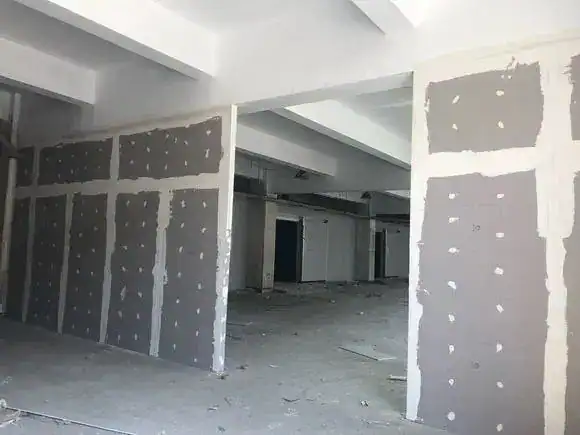
Gypsum board partition walls are widely used in modern architecture due to their light weight, easy installation, and versatility. Below are the main advantages and disadvantages of using gypsum boards for partition walls.
Advantages
1. Lightweight and High Strength
Gypsum boards are typically 9.5–15mm thick but weigh only about 6–12 kg. Despite their light weight, they provide excellent partition performance when installed on light steel frames. A gypsum board wall weighs only about one-tenth of a brick wall. For example, a 12mm thick gypsum board has a longitudinal breaking load exceeding 500N, making it strong enough for interior wall applications.
2. Excellent Decorative Flexibility
Gypsum board partitions can be designed in various styles and are easy to decorate. The surface layer can be finished to meet different architectural needs, commonly used in offices and conference rooms. Moisture-resistant boards are available for wet areas such as bathrooms, while fire-resistant boards can be used in areas requiring higher fire protection.
3. Cost-Effective and Resource-Saving
Compared with traditional brick walls, gypsum board partitions with light steel framing can reduce the need for wall chasing for electrical or plumbing installations. They also eliminate the need for plastering or leveling before wallpapering, which lowers construction costs, shortens project time, saves materials, and reduces waste.
4. Low Shrinkage and Dimensional Stability
Gypsum boards have stable chemical and physical properties. They exhibit minimal expansion or contraction under dry or humid conditions, preventing cracks at joints — a common issue with other lightweight boards. Therefore, they are suitable for areas prone to slight movements or vibrations.
5. Good Sound Insulation and Safety
Gypsum board partitions offer excellent sound insulation and are easy to cut and process. They are non-combustible, resistant to insects, dimensionally stable, and suitable for a wide range of applications.
Disadvantages
Despite their many advantages, gypsum board partitions also have some drawbacks.
Their moisture resistance is relatively poor, making them prone to deformation in humid environments. They also lack load-bearing capacity, so heavy items cannot be hung directly on the wall. Over time, gypsum boards may turn yellow or lose their appearance if not properly maintained.
Conclusion
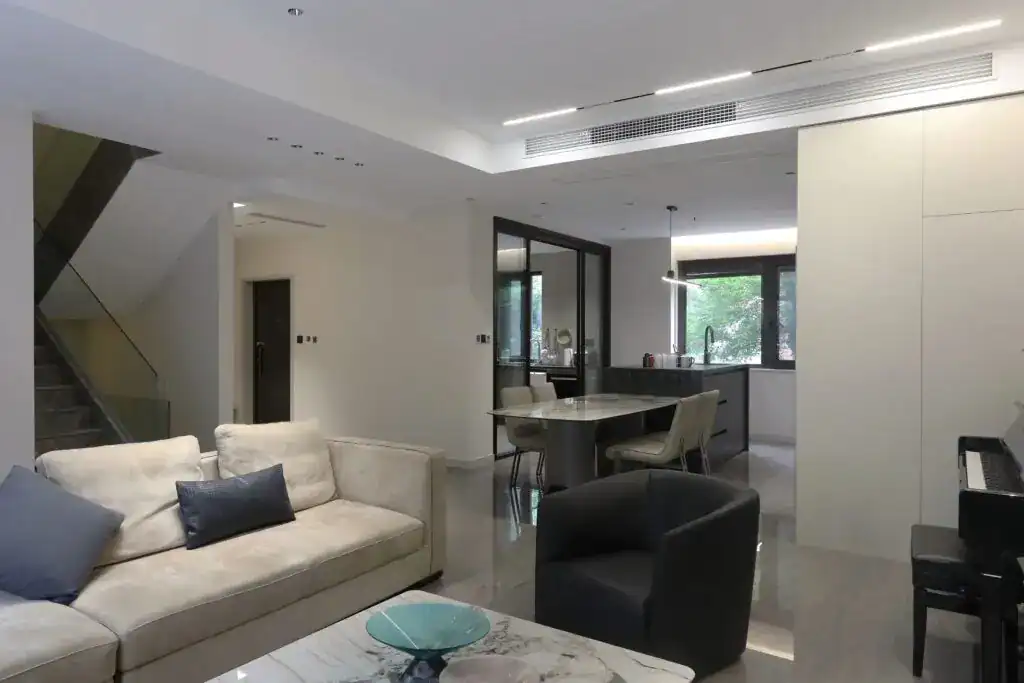
As a lightweight and elastic wall material, gypsum board partitions are an ideal choice for most homes and offices. By understanding both their advantages and limitations, you can better determine whether gypsum boards are the right solution for your interior wall design.